What to do when life throws us off balance?

AS I SEE IT
By Rev. Jim Innes
AROUND 605 BCE, when Babylon conquered Jerusalem, King Nebuchadnezzar ordered that promising young men from Israel’s nobility be taken from their homes to Babylon to serve in the royal court. Daniel was one of them, suddenly displaced and thrown into a new culture.
Trained in Babylonian language and literature, Daniel soon gained a reputation for wisdom, integrity, and faithful service. Under King Darius, he rose to such prominence that the king planned to set him over the entire kingdom; a remarkable stability after so many upheavals.
But jealous officials, unable to find any corruption in his work, decided to target Daniel’s deepest loyalty—his faith. They persuaded Darius to issue a decree that for thirty days no one could pray to any god or person except the king, on pain of being thrown into a den of lions. Though it was presented as a way to prove loyalty to the king, it was a trap for Daniel, since everyone knew about his daily prayers.
Once again, Daniel’s world lurched. Confronted with a law that violated his conscience, he refused to hide. Instead, fully aware of the risk, he continued to open his window toward Jerusalem and pray three times a day, just as he had always done.
The officials were watching. They caught him praying and reported him to Darius, reminding the king that, under their system, once a law was signed, it could not be taken back. Though Darius valued Daniel, he felt trapped by his own decision and reluctantly ordered him to be thrown into the lions’ den, hoping that Daniel’s God would protect him.
At dawn, the king hurried to the den and called out to Daniel. To his astonishment, Daniel answered. God had protected him; he emerged unharmed, having stood firm in faith even as everything around him shifted.
In life, when things fall apart (as they did for Daniel), it can be hard to keep our balance. We can feel devastated by the emotional stress. Even when our minds tell us to step back and not react, another part of us wants to jump in, fix things, and get back to a sense of safety, and to do it right now!
When life gets messy and confusing, we can (quite quickly) lose sight of what matters most to us. And, unfortunately, in terrifying moments, react self-destructively.
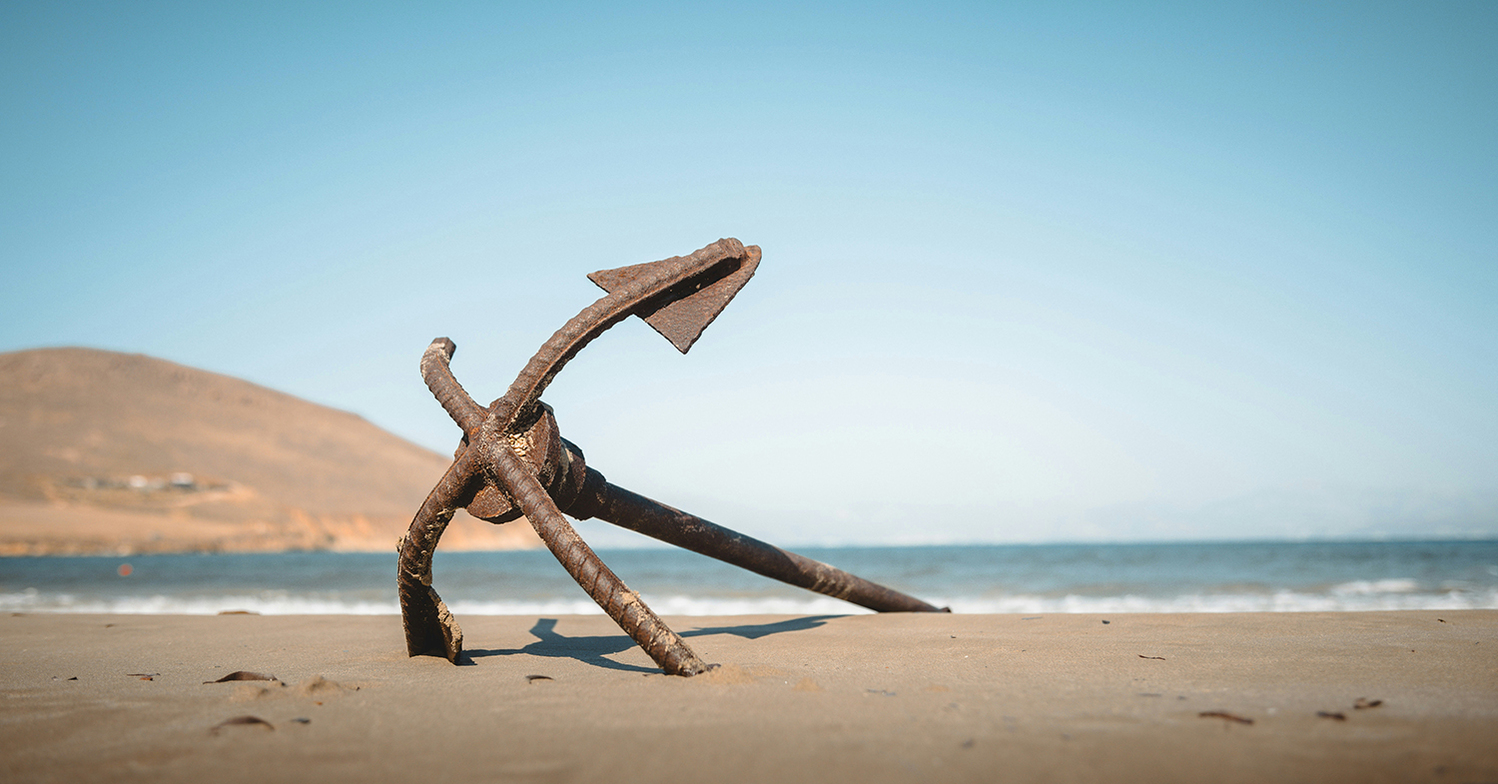
Like Daniel, we need something that keeps us steady when life suddenly shifts—an anchor that holds us to what matters most. An anchor is any simple, steady practice that helps us pause, breathe, and stay connected to our truth (a task that requires another article to explain fully).
For Daniel, that anchor was regular prayer. For each of us, it might look different, but the idea is the same: we need something solid we can return to so that when life throws us off balance, we’re not controlled only by fear or pushed around by whatever is happening in that moment.
And yet, beneath all our talk of anchors is a raw, human reality: when we lose our grounding, everything inside can feel like it’s falling apart. We spin, grasp, lash out, or shut down. Relationships strain, hope fades, and even faith can feel far away. It’s in that free fall that we recognize our deep need for something stronger than our fear to hold us fast.
Rev. Jim Innes is the rector of St. John's, Grand Bend with St. Anne's, Port Franks.
Photo: Janosch Diggelmann/Unsplash