Relocating the reservoir of our corporate memory: What is an archive?

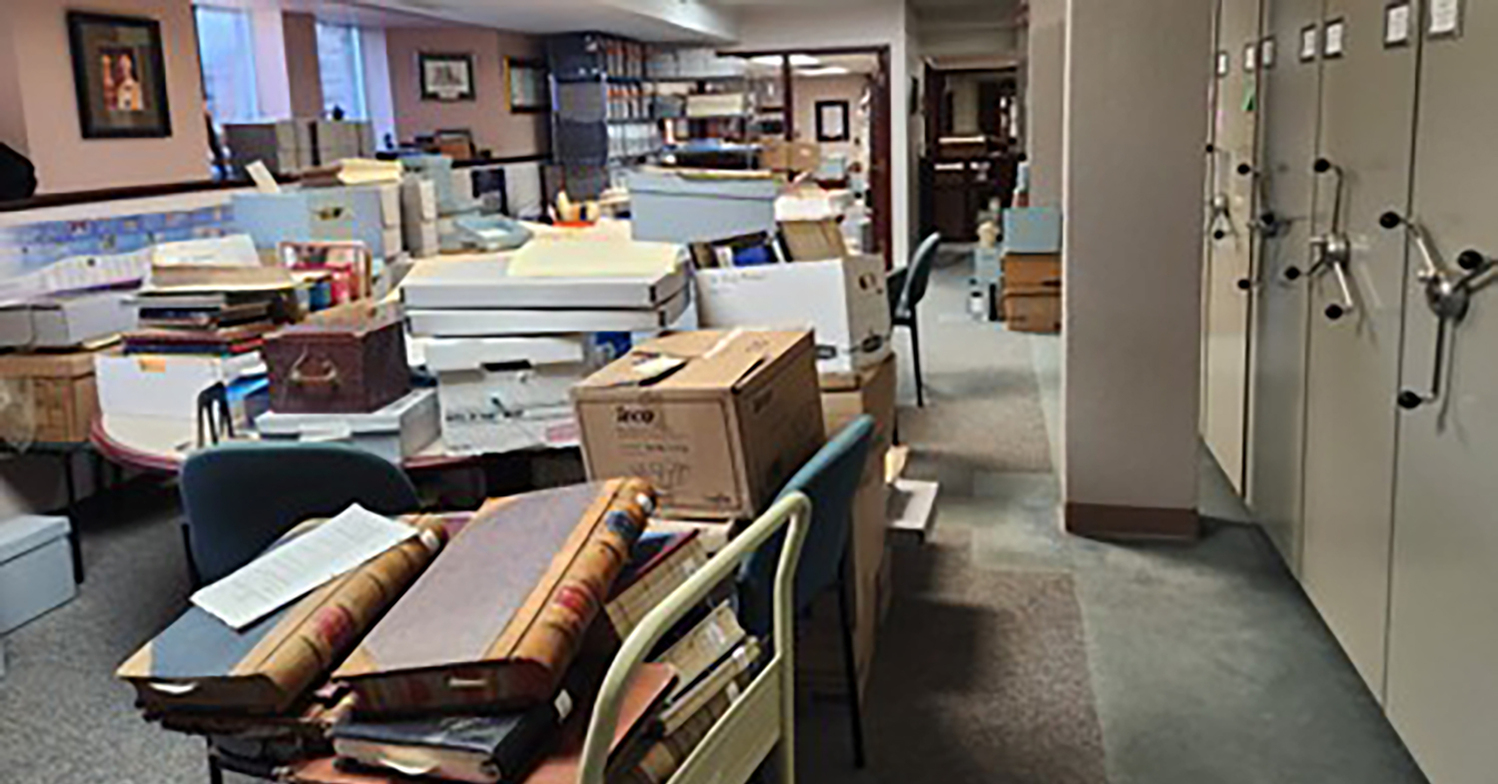
Receipt of parish material will be suspended beginning Friday, December 19, 2025, but it will be very busy in the Archives at its current location. Moving all records to the new permanent location, at St. Paul's Cathedral, will be a huge undertaking for the Archives Move Task Force
By Dez Nacario
Canon 16, Section 5 mandates that parishes deposit “all Parish registers, books, documents, records and papers relating to the Parish which are no longer in use and are suitable as archival material.”
But what exactly is an archive and why is it necessary for us as a Diocese to maintain one?
The materials outlined in the Canon contain the stories and memories of each parish, and it is the task of the Archives to preserve them and keep them safe for the use of future generations.
An archive is a collection or repository of information that documents history.
Typically, archives have a focus such as geographical location, organization, family, or group of people. The purpose of an archive is to collect, preserve, and make available historical information to interested users.
What makes archives unique from libraries, museums, and galleries are the collection mandates. Libraries are concerned with collecting published materials such as books and periodicals and museums and galleries focus on artefacts and visual media. While all of these types of materials could find their way into an archive, the majority of an archival collection deals with records.
Records are typically textual such as diaries and journals, meeting minutes, correspondence, by-laws, property documents, and financial ledgers; however, archival records can also include maps, photographs, sound and video recordings, and architectural plans and drawings. Records can be both physical (on paper) or digital.
Receipt of parish material will be suspended beginning Friday, December 19, 2025.
Parishes will be notified of a date in Fall 2026 when they will be able to transfer materials to the new space.
Tips on how to safely store your records until we are able to receive them again:
- Store records in a clean, dry place – preferably in drawers or on shelving, not on the floor;
- Try to limit your records’ exposure to light, pests, harsh chemicals, and fluctuating temperatures;
- Write legibly in pen (future researchers will thank you!);
- Keep your records in chronological order or otherwise organized in a way that makes logical sense;
- Apply appropriate labels and names to files including dates when possible.
Regardless of format, archival records are materials that were created or received during the regular activities of the person or group to whom the collection pertains. Each type of record in an archive must be assessed for its historical value or significance, collected, organized to a set of standards, preserved, and made available for research.
Archives can offer security, environmental control such as temperature and humidity regulation, and most importantly, knowledge on how to best keep the records in a way that ensures longevity and easy accessibility.
Depositing records in the Archives clears up space in the parishes and creates standardization in how they’re organized and stored.
The upcoming move to St. Paul’s Cathedral will help centralize Diocesan services and provide more storage space and researcher space.
The Archives Move Task Force looks forward to unveiling the new facility in 2026!
Questions about the move and new space can be directed to: leightonarchives@huron.anglican.ca.
Dez Nacario is the Diocesan Archivist.