Pentecost – a feast tailor-made for our times

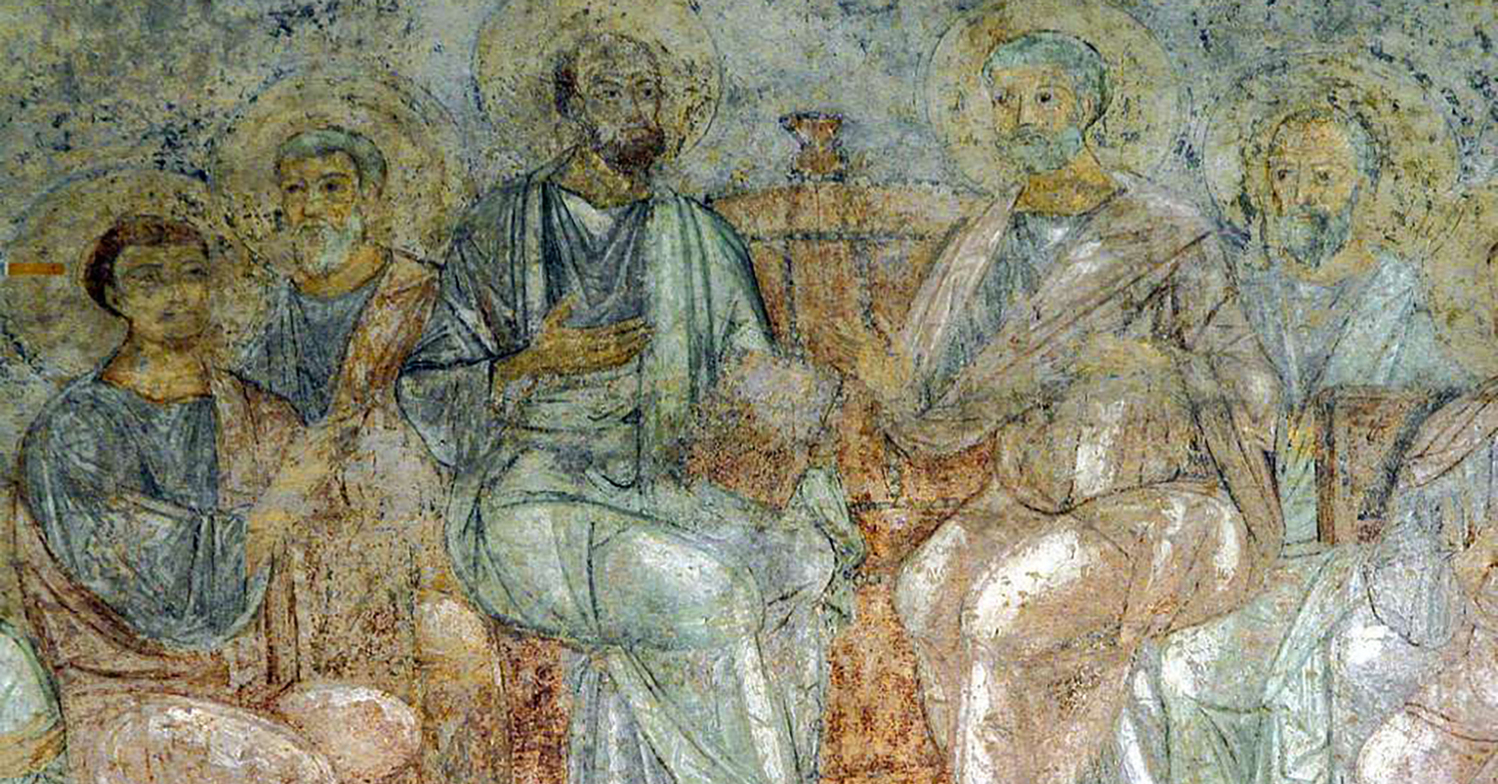
The descent of the Holy Spirit (detail), St. Sophia Cathedral, Kyiv, Ukraine
IT'S JUST KEVIN
By Very Rev. Kevin George
“THE SPIRIT creates diversity and is the great connector of all those very diverse things,” writes the Franciscan friar, Richard Rohr.
On the last weekend in May, we celebrated the Feast of Pentecost. It is the moment when the very breath of God blows upon the disciples and breaks open new and profound ways of relating to one another. In a world that seems increasingly focused on what divides us, Pentecost does not simply comfort—it confronts. It confronts our assumptions about who belongs, who speaks, and who is heard. What happened on that day was relational. It was communal. It was disruptive. The Holy Spirit becomes the great connector—but not without first unsettling what we have grown comfortable maintaining.
Pentecost is a feast tailor-made for our times—but not because it soothes us. Because it challenges us.
We live in an age of reaction and rage. Our attention is constantly shaped—often manipulated—by short reels that tell us what to fear, whom to distrust, and what to consume. We are discipled, daily, into anxiety. Fear has become a kind of currency.
Scripture tells us the disciples also lived in fear. But God’s response to these earliest followers of Jesus was not to reinforce their fear, nor to hand them a manual for self-protection. God did not give them a binder—a new set of rules—but a new way of being, of relating: he gifted them the Spirit. And that Spirit did not leave them where they were. It drove them out.
Henri Nouwen writes, “When the Spirit descended on the disciples huddling together in fear, they were set free to move out of their closed room into the world.” Pentecost is not the sanctification of staying put. It is the undoing of fear’s grip. It is the refusal to let fear define the boundaries of community. And so, I would say this plainly: no theological difference, no difference of gender identity, no race, no cultural divide can separate us from the love of God. The Spirit refuses the divisions we cling to. The Spirit will not cooperate with our exclusions.
Barbara Brown Taylor reminds us that “the only real difference between anxiety and excitement is the willingness to let go of fear.” Pentecost demands precisely that. Not a vague optimism—but a costly release of fear. I wonder what would happen if we actually believed that.
What if we took the breath of God that has been given to us—in all our difference, all our complexity—and dared to breathe together the love of Jesus into the world? It would be quite the conspiracy. The word conspire means “to breathe together.” Perhaps Pentecost is not just an event we remember, but an invitation we have yet to accept: a holy conspiracy.
In a time when violence, destruction, and domination dominate our headlines, the Church is faced with a choice. Will we echo the noise—or embody an alternative? With God’s help, we are called to breathe together a different way.
To seek and serve Christ in all persons—not just those who look like us, think like us, or vote like us. To love our neighbour as ourselves—not as an idea, but as a practice. To tell the truth about our failures and seek reconciliation—especially when it is costly. To strive for justice and peace in a world that profits from division. To proclaim, in word and action, that every human being has dignity and worth. To safeguard and love creation in the face of its exploitation. This is not safe work. It is Spirit-led work.
We conspire together when we gather—around tables, in cathedrals and country churches, in kitchens and at campfires—not simply to feel connected, but to be formed into a people who live differently. A people who refuse fear. A people who practice radical hospitality not as sentiment, but as conviction. And so let me be clear: if our tables exclude, they are not yet shaped by the Spirit of Pentecost.
No one shall be excluded from the table.
Very Rev. Dr. Kevin George is Rector of St. Paul's Cathedral, London, and Dean of Huron.