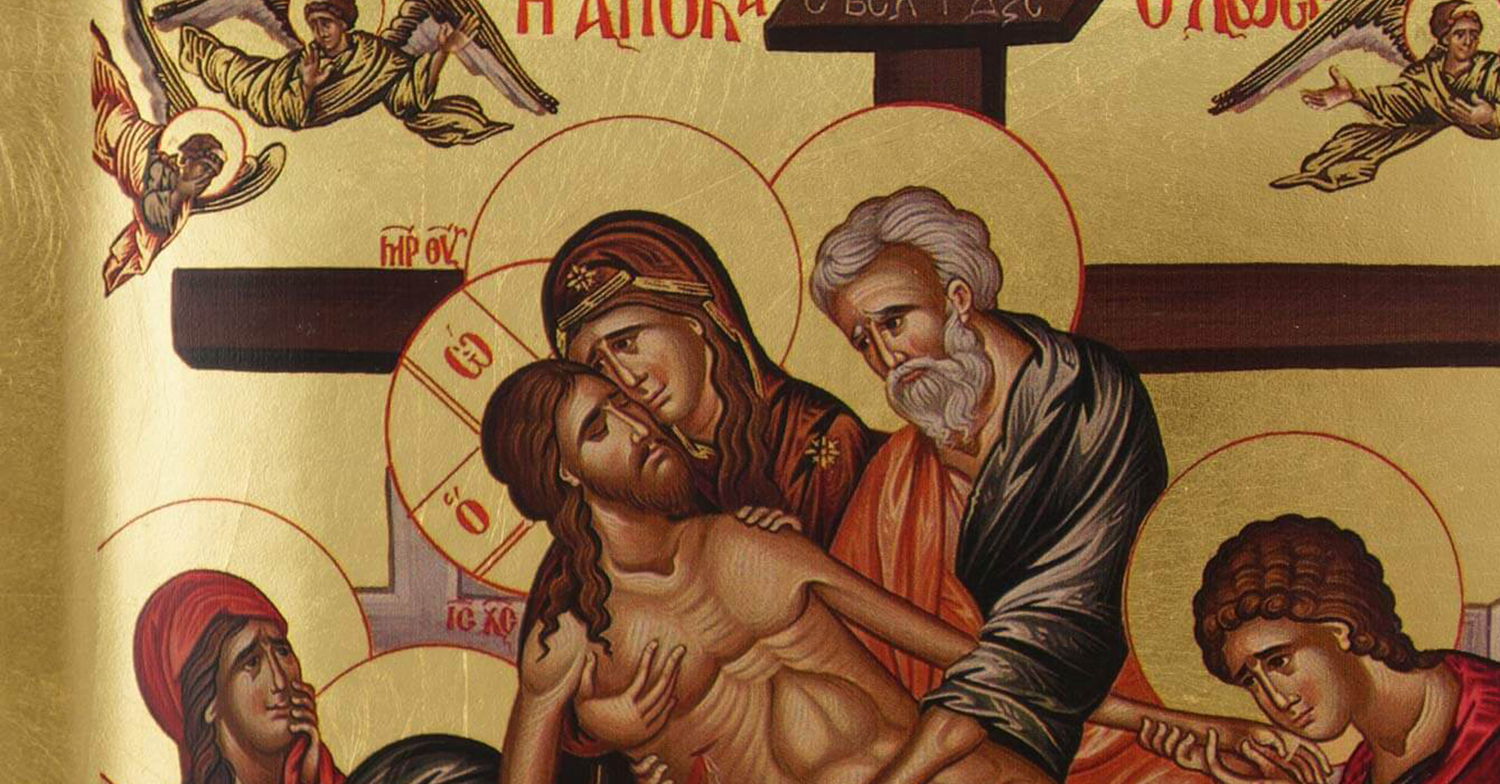
God enters into all human suffering with full solidarity

IT'S JUST KEVIN
By Very Rev. Kevin George
WE ARE in one of those years. The years when Easter falls early. Not the earliest, which would be March 22, but early enough at April 5.
What that means in Churchland is we are barely done with the Christmas Season and the Feast of Candlemas when Ash Wednesday is upon us; this year falling on February 18. The nature of submission dates for this publication means that as I write this column for you to read just ahead of Lent, the music behind me is reminding me of the Incarnation - of God-With-Us; Emmanuel. “Shepherds, in the fields abiding, Watching o'er your flocks by night, God with man is now residing, Yonder shines the infant light!”
As you prepare for Lenten fasting, and entering into a journey towards Good Friday, these words of the beloved Christmas hymn may seem inconsequential with Ash Wednesday just around the corner. What seems a little disconnected is anything but.
One of my favourite Lenten books is Brian Zahand’s The Wood Between the Worlds: A Poetic Theology of the Cross, IVP, 2024. If you are searching for a book to challenge you through this Lenten season, I commend it to your reading. In it, Zahnd writes:
“If left to our own assumptions and projections, we will imagine God as unreachably aloof and horribly violent…But the lifeless body of Christ upon a tree shatters our illusions. At last we have a true image of God. It is a shocking and perhaps unsettling image of God, but it is a true image—the true image.” (Brian Zahnd, The Wood Between the Worlds: A Poetic Theology of the Cross, Downers Grove, 2024)
In the Christmas hymns we sing of God as “in flesh appearing.” It cannot be fleshier than the shocking and scandalous image of God, beaten and lifeless on the tree. This assertion of Zahnd’s that this is the true Imago Dei may be hard for some. But make no mistake, this scandalous image is Good News. That God incarnates as a vulnerable infant, chooses to live the life of a servant, depends on the generosity of others, and extends hospitality to all others throughout his life, and then endures the Passion and crucifixion is affirmation of what the Kingdom of God is all about This God-Upon-The-Cross is the same ‘God in flesh appearing.’
It no doubt sounds outrageous — because it is outrageous! God is audacious enough to be God-With-Us in defeat. “The cross is both the substance and the symbol of folly, weakness, death, defeat, and abject humiliation. But [remember] Paul argues that God uses the folly of the cross to shame the wisdom of the philosophers, that God makes use of the nothings and nobodies of the world to confound the powers that be.” (John Caputo, The Folly of God: A Theology of the Unconditional, Salem, 2026) Jesus empties himself, born in human likeness, and humbles himself even to death upon the cross.
This should allow us permission to not only embrace our own vulnerability, our own weakness and our own fear, but to also place ourselves, our souls and bodies, our prayers and our efforts adjacent to those who suffer. Where are the broken bodies of our day? Have we eyes to see Jesus in the lifeless body of a child in Gaza? Can we feel the longing of the dad who is forced to sit on the cold hillside on the outskirts of Kiev wondering how his little girl is managing without him? Have we ears to hear the cry of Jesus in the desperate young transgendered person who has been so emotionally and physically abused that they want it to be finished? This God who chooses the folly of the Cross is asking me if I can recognize his corpus on the cross in the more than fifty corpses lifted off the streets of my city in the past twelve months?
‘The Word was made flesh. And dwelt among us!’ “God has pitched a tent in the world… in the arts and sciences, in ethical and political life, where the world is busy making the Kingdom of God come true…in the sacrament of the world. The so-called secular world is the realization of the kingdom of God, not its obliteration.” (Caputo)
So, this Lent, let’s not cloister. Have we the courage to do as God has done? Can we lean in? Instead of retreating from ‘the word.’ Let us instead see Lent as Walter Brueggemann who referred to this season as “the great departure from the greedy, anxious antineighbourliness of our economy, a great departure from our exclusionary politics that fears the other, a great departure from self-indulgent consumerism that devours creation. And then an arrival in a new neighbourhood, because it is a gift to be simple, it is a gift to be free; it is a gift to come down where we ought to be.” (Walter Brueggemann, A Way Other Than Our Own: Devotions for Lent, Louisville, 2007)
As God has entered into all human suffering with full solidarity, let us depart from the greed, consumption, divisiveness, and rage that seems to hold us hostage, and enter instead into the neighbourhoods so in need of kindness, love, and justice. God is not aloof. God is not far away. God hangs on the gallows with all who suffer. Every step we take towards the suffering of another, the closer God becomes. Let us work to make a neighbourhood, a community, a church, that will be marked by simplicity, love, kindness, and mercy; a neighbourhood guided by the principles of shared life and of generosity.
So, this Lent, we can give up chocolate and beer if we must. At the same time, I am praying we might embrace the foolishness of the cross; that we take up the cross. It will mean something different for each of us no doubt. But each of us has within our reach the opportunity to help another know that God has drawn near, to reassure them that God does not cause their suffering but is in solidarity with them in their pain — and as God is in solidarity with them, so are we.
Very Rev. Dr. Kevin George is Rector of St. Paul's Cathedral, London, and Dean of Huron.