Canterbury: Tales of the past, for the present and the future

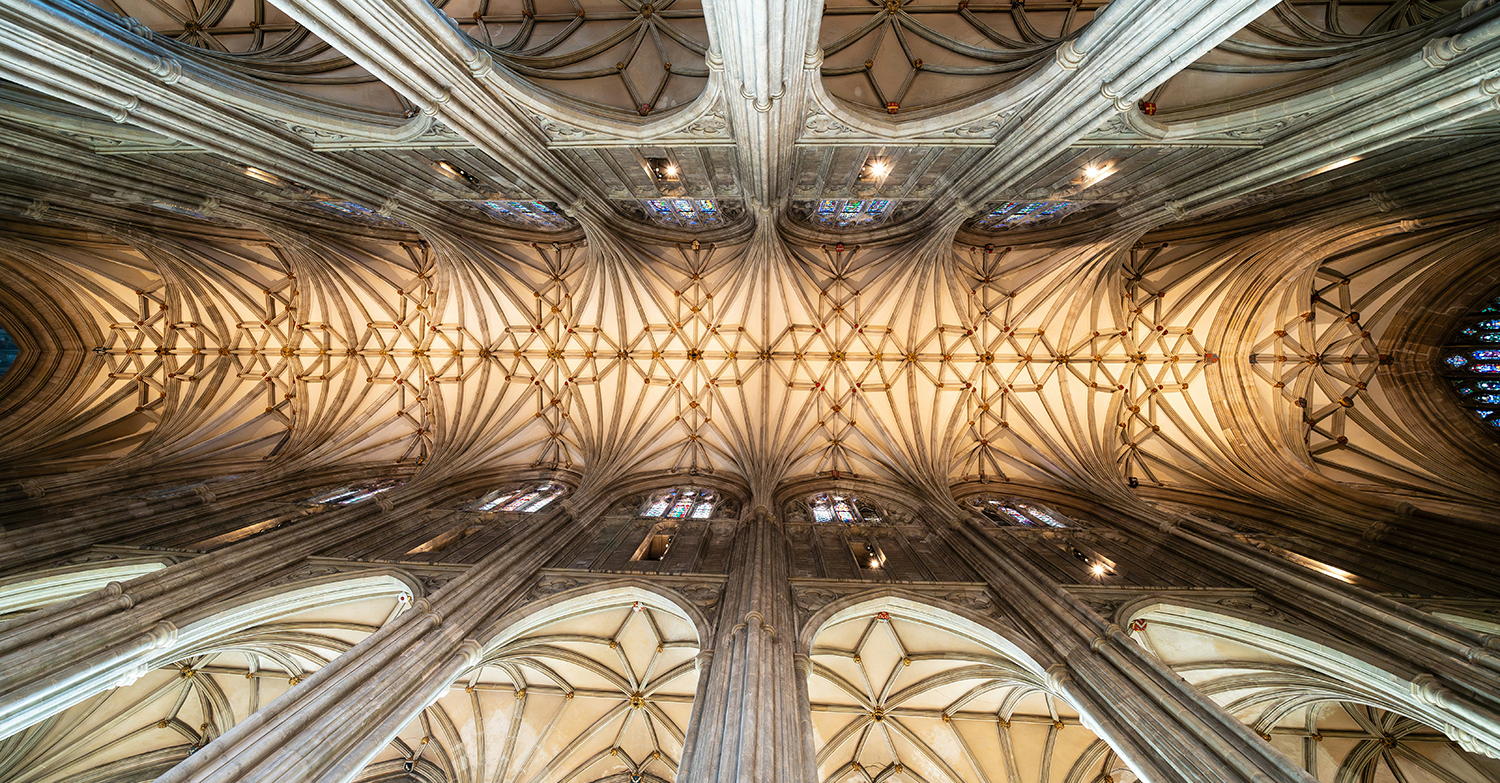
Canterbury Cathedral is a focal point for those whose identity as members of the worldwide Anglican Communion reflects how they experience and express their faith and love for our Lord.
A VIEW FROM THE BACK PEW
By Rev. Canon Christopher B. J. Pratt
AS A NEW YEAR begins, I open the pages of my new paper calendar and look at the blank and empty pages. I wonder what will fill those days in the year ahead. Then, as I look at those pages, I reflect on the fact that many of those days are already marked in a special way.
Through the years, the Church, has noted that there are days which have been marked to remember, commemorate and honour individuals whose life, ministry and sometimes, their death, bears witness to their faith - filled commitment to Jesus. Many of the individuals have been identified as Saints. There are also those whose lives have not been put in that category. At the same time, their discipleship has been deemed to be of special significance so that we need to be reminded of their story.
An individual whose story is a part of our Anglican heritage is Archbishop Thomas Becket. He was martyred in Canterbury Cathedral on December 29, 1170. Canterbury Cathedral is a focal point for those whose identity as members of the worldwide Anglican Communion reflects how they experience and express their faith and love for our Lord.
For those who seek a quick historic update regarding St Thomas I invite you to view the film “Becket”, which was produced in 1964. If you are interested in a more theatrical presentation of the story, you may want to read the play by T.S. Eliot, entitled “Murder in the Cathedral”, which was first presented in 1935. Hopefully, the stories, both theatrical and on film, will pique your interest and you will seek out more historically accurate information.
Discovering powerful reality of the story may be experienced by going to Canterbury Cathedral. Travelling with my parents when my Father was taking a summer course gave us the opportunity of being given a tour of the Cathedral which was led by one of the Canons. His love of the place came through as each niche and corner had its own story. We arrived at the place where Archbishop Becket was murdered, and he dramatized the moment by choosing three members of the group to take on the roles of the three knights who did the deed. I was chosen to fill the role of the youngest knight! At the age of ten moments like that get indelibly etched into your life and memory.
Over the centuries, pilgrims have journeyed to Canterbury. In “The Canterbury Tales”, written by Geoffrey Chaucer around 1400, individuals tell their stories as they journey towards the Shrine of St Thomas. Many who left their normal pattern of life and engaged in a pilgrimage to Canterbury did so with the belief that if they went to see the place where the Archbishop had been murdered and knelt in the Corona Chapel, at the shrine where the crown of his skull had been preserved, their prayers would be answered. Stories of miraculous healings permeated the society of the day, fostering those beliefs and expectations.
As a priest, I planned to take my own summer course at Canterbury. Correspondence with the Dean led to, not only having the opportunity to administer a Chalice at the main service on a Sunday, but also to preside and preach at the Eucharist on the Feast of St James. The service took place in the Corona Chapel. As a student of history and as a person of faith, it was yet another experience which is etched into my life and memory.
Canterbury Cathedral has special meaning for the worldwide Anglican Communion, when those who are called to Episcopal ministry gather at the Lambeth Conference. The Corona Chapel became a focal point during one of the more recent services held in that setting. There was a recognition that even with its unique place in the life story of our denomination, the story of those who have been martyred for their faith is not a story which may be confined to the pages of history.
Throughout the years, in different parts of our global village, there have been those who have professed their faith in Jesus Christ and have done so, knowing that they were putting their lives at risk. That danger is a reality today. Because of that reality, and the stories which are told of the ultimate sacrifices which have been made, the Corona Chapel is now known as the Chapel of Modern Day Martyrs.
In the year ahead, you may have the opportunity to renew your own Baptismal Vows. Listen well to the questions you will be asked:
"Will you proclaim by word and example the Good news of God in Christ?"
and,
"Will you strive for justice and peace among all people, and respect the dignity of every human being?”
(BAS pg. 159)
Throughout the year 2026 you will have opportunities to make decisions about how you will make those commitments a reality in your own life. In Canada, your commitment may not lead to martyrdom, but it may lead to sacrifice. At a moment in time when we may be called to answer the questions, "Will you strive…" and "Will you proclaim…?”, may we all offer a sincere response:
"I will…with God’s help."
Rev. Canon Christopher B. J. Pratt has retired from full-time parish ministry but continues to offer priestly ministry in the Diocese.
chrispratt@diohuron.org
Photo: Tomasz Zielonka/Unsplash