By Rev. Chris Brouillard-Coyle
“I accept and I confess before God and you, our failures in the residential schools. We failed you. We failed ourselves. We failed God.”
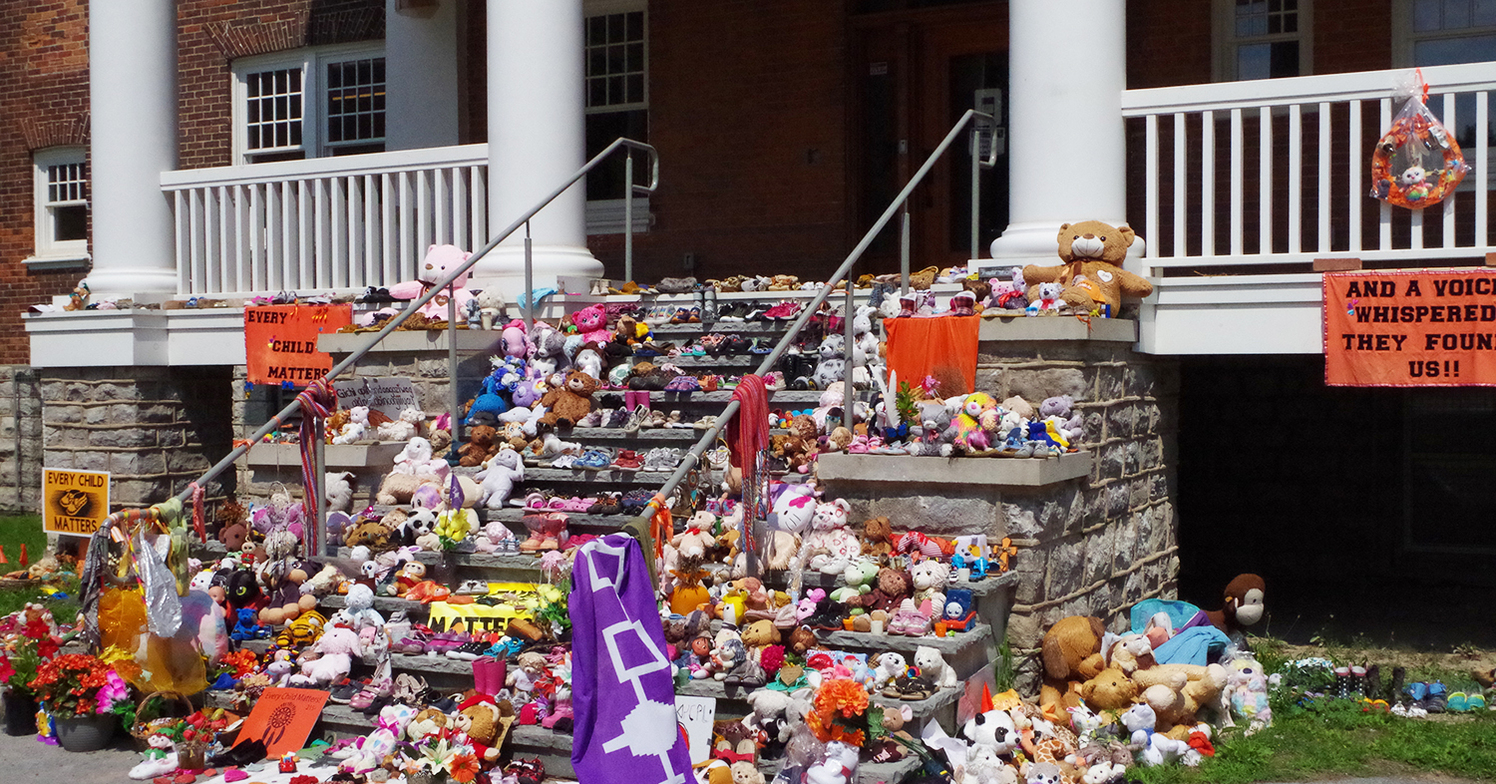
The words of Archbishop and Primate Michael Peers, delivered as an apology to the Sacred Circle for the Anglican Church of Canada’s role in residential schools on Aug. 6, 1993, are now inscribed on the walls of the Mohawk Institute at the Woodland Cultural Centre. The former Mohawk Institute Residential School reopened as an Interpretive Historical Site on the National Day for Truth and Reconciliation, Sept. 30, 2025. This sacred space now provides self-guided and audio tours that offer participants profound insights into the stories and experiences of the children of the school.
This school is located within the Diocese of Huron, in Brantford. It is a part of our history. As such, we are reminded through the stories that it was bishops, elected by clergy and lay people in our diocese that made decisions that impacted the lives of the children at the school. To walk through this space is to be reminded that this history is part of our collective history. What have we learned? What can we still learn?
It can be said that many throughout the Diocese didn’t know what was happening. Many bought into the idea that the schools were somehow benevolent. As we enter into a new year, what would it look like if every settler in this Diocese challenged ourselves to make a trip to Brantford and visit this site? To what extent are we, as settlers, willing to challenge any lingering attitudes and prejudices we might have? To what extent are we willing to bear witness to the stories of the survivors? To what extent have we considered the irony that we can celebrate our children graduating from school while First Nations, Métis, and Inuit peoples have either themselves or know someone who survived residential schools? To what extent are we willing to recognise, as Archbishop and Primate Michael Peers said, the failures of our past?
Maya Angelou once said: Do the best you can until you know better. Then when you know better, do better.
Walking in the sacred halls of this Interpretive Historical Site is a powerful experience even for those who are knowledgeable about residential schools. There is something about being present in the space where these stories happened, where children as young as 4-years old encountered adults who failed to seek and serve Christ in them, and truly love them as neighbours.
To walk these halls and read these stories is to bear witness to our failures and challenge ourselves to consider how we can do better now. To walk these halls and read these stories is attainable for people across the diocese. How many of us are willing to open our hearts to the truths, sit with the discomfort of our failures, and pray for transformation?
As we look toward a new year, with new possibilities, may we embrace the Baptismal challenges to seek and serve Christ in all persons, loving our neighbour as ourselves, and to strive for justice and peace among all people, and respect the dignity of every human being, by taking a good, long, hard look at our relationships with First Nations, Métis, and Inuit peoples.
May every settler be open to knowing better and continually working to do better and may we embrace the responsibility to build relationships that are respectful and reciprocal trusting in the possibilities for our diocese and our world.
Rev. Chris Brouillard-Coyle is a co-chair of SEJH.