Cultivating faith leadership teams: Eat, pray, serve

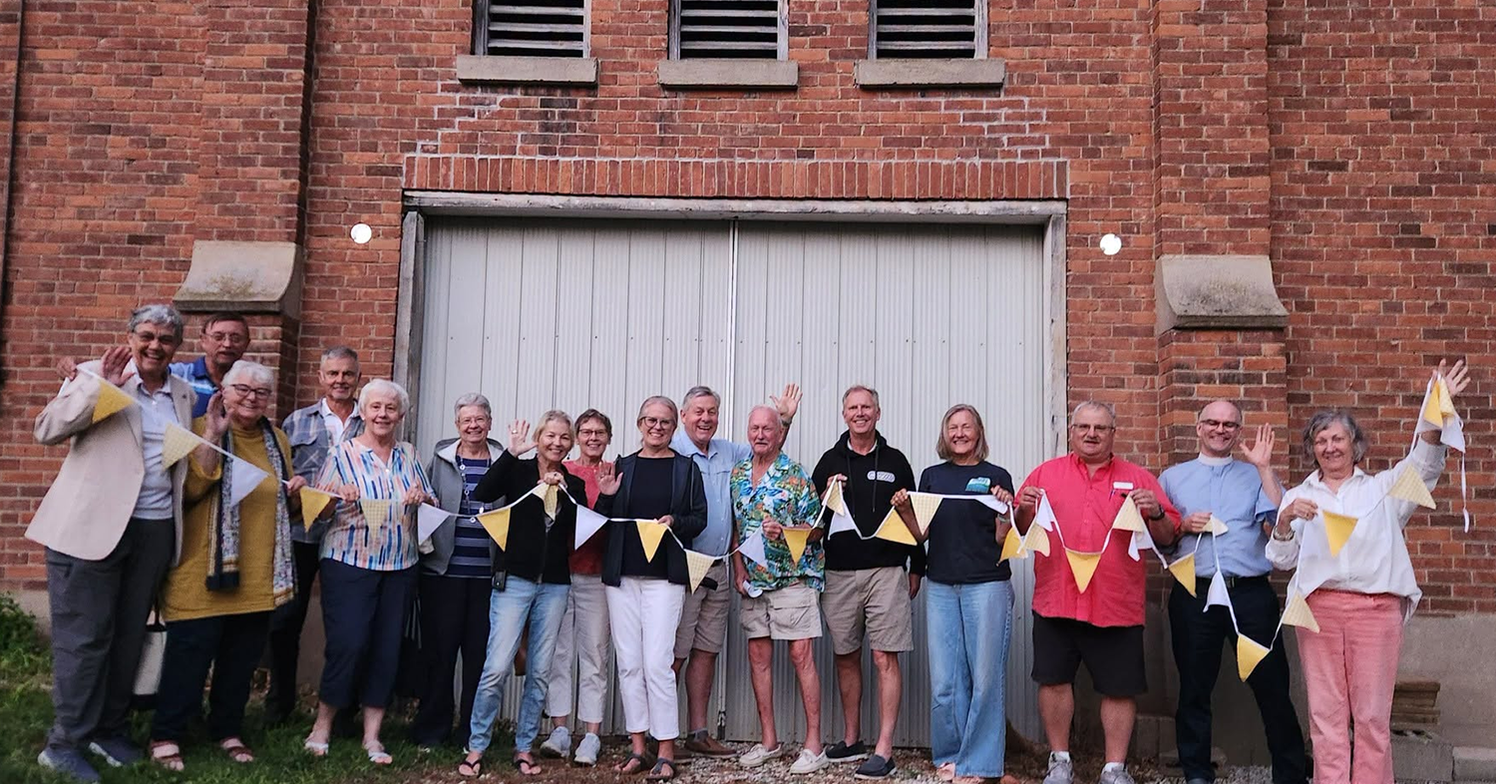
Members of St. George's Parish Council celebrate the reopening of their 1870s Carriage House for the use of the wider public.
GROWING BEYOND THE DOORS
By Rev. Canon Grayhame Bowcott
THIS PAST AUGUST, the Parish Council members of my congregation sat around a table on the back deck of our Rectory.
We shared a simple pasta dinner, some wine, and an evening of informal conversations about ministry planning for September. There was much laughter, familiarity and an aura of positive energy around our table. Instead of a leadership council, we felt like a family of friends, caring for one another, dreaming together, and deeply invested in each other’s well-being and the future of our Anglican congregation. Certainly, this was a moment to sit back and say: “thank you, God, for these leaders.”
This type of synergy doesn’t happen overnight, and I have been part of parish councils in the past where tensions were high, disagreements were frequent, and a shared congregational vision was lacking. And so, in today’s article, I ask: what makes a healthy parish/congregational council?
The leadership of a healthy, positive and unified parish/congregational council can make all the difference in the world to the broader feel of a local church. Positive energy is contagious, and the modelling of a group of church leaders who care for each other, and work closely together, can inspire the members of a congregation to be more committed to the ministry and vision of a faith community.
In my years of ministry leadership, I have come to recognize that there are certain ingredients that are needed to shape a group of faith leaders so that they may come to self-identity as family together. These ingredients are not rocket-science by any means, however, a deficit of any of these three characteristics often results in leadership teams that may not form together, or come to share, a unified direction for their church. Three simple ingredients to form the foundation of community: eating together; praying for each other and the Church; and serving both the congregation and the wider neighbourhood.
Eating together. It seems that Jesus did his best ministry wherever food and common meals were to be found. It’s no surprise then that sharing a meal together allows for individuals to bond, to relax, and to relate to one another. Some leadership teams take their ministry so seriously that they never find time to lower their guard and find common ground together. What greater way to do this than to enjoy meals with one another? Eating meals is a foundational social act within the Church, and a leadership team that neglects to make time to do so passes up the opportunity to grow in their relationships together.
Praying for each other and the members of the congregation. Some leadership teams may take for granted that prayer is a gift that God has shared with all people, and not just the clergy of a congregation. Prayer reveals the intentions of our hearts, and has the power to bring us into closer relationship with one another. Congregational teams that ask for each other’s prayers, and remember one another in prayer, are communities that will grow to better trust both God and each other.
I hold firmly to the belief that no meeting in the Church should ever begin without being upheld in prayer, as both an invitation to God to come alongside us, and as the motivation and spark of the ministry that we are called to do together.
Prayer is also an opportunity for leaders to listen to, and be led by God, who calls each congregation to grow in its relationships and in the living out of our Christian lives together.
Serving others. In some ways, this is what Christians are called to do. We are called to serve others, to care for others, and to be an expression of the love that God has shared with us through Jesus. Sometimes serving others can be challenging, and some congregations have even reached a stage in their lives where they may be doubting if they have the energy and the resources to continue to serve others. Yet, the power of the Gospel message is that God is always directing us to look outwards from ourselves in asking: where are we being called to help and care for our neighbours? Who are we being called to serve? In a similar fashion to sharing meals together and praying for one another, the experience of serving, side-by-side, with other Christian leaders can act as a bonding agent for leadership group formation.
Within my congregation’s leadership team, one of the questions that we regularly fall back on to guide our activities is the question: who is God drawing us into relationship with to serve? In answering this question, we have found that our network of neighbourhood groups has continued to grow every year. Within the wider Blue Mountains community, our leadership team has come to be known as a community of collaborators, and other groups are excited to partner with us.
Serving others is fun, especially when our faith calls us to emulate the generosity of Christ to others. In opening ourselves to others in service, we often discover new relationships, new needs in the community, and an invitation for the church to partner with the wider neighbourhood. Often the result of these partnerships is the cultivation of a shared identity that your church leaders know that they are making a difference in their local communities. This affirmation, from God and others, spills over into their patterns of worship, discipleship, and personal commitment.
As a final note of appreciation in this month’s topic of cultivating faith leadership teams – for clergy and congregations to take note – never pass up an opportunity to say: “Thank you! And, thank God!” The leaders of our congregations throughout Huron do amazing things in the putting of their faith into action. For any who may feel underappreciated: “Thank you for your care; thank you for your faithfulness; and thank you for your service!”
Rev. Canon Dr. Grayhame Bowcott is passionate about fostering congregational relationships and sharing our Anglican vocation with others. He serves as Rector of St. George’s, The Parish of The Blue Mountains, and as Program Director for the Licentiate in Theology program at Huron University.