Forming generous disciples: Renewed vision of stewardship

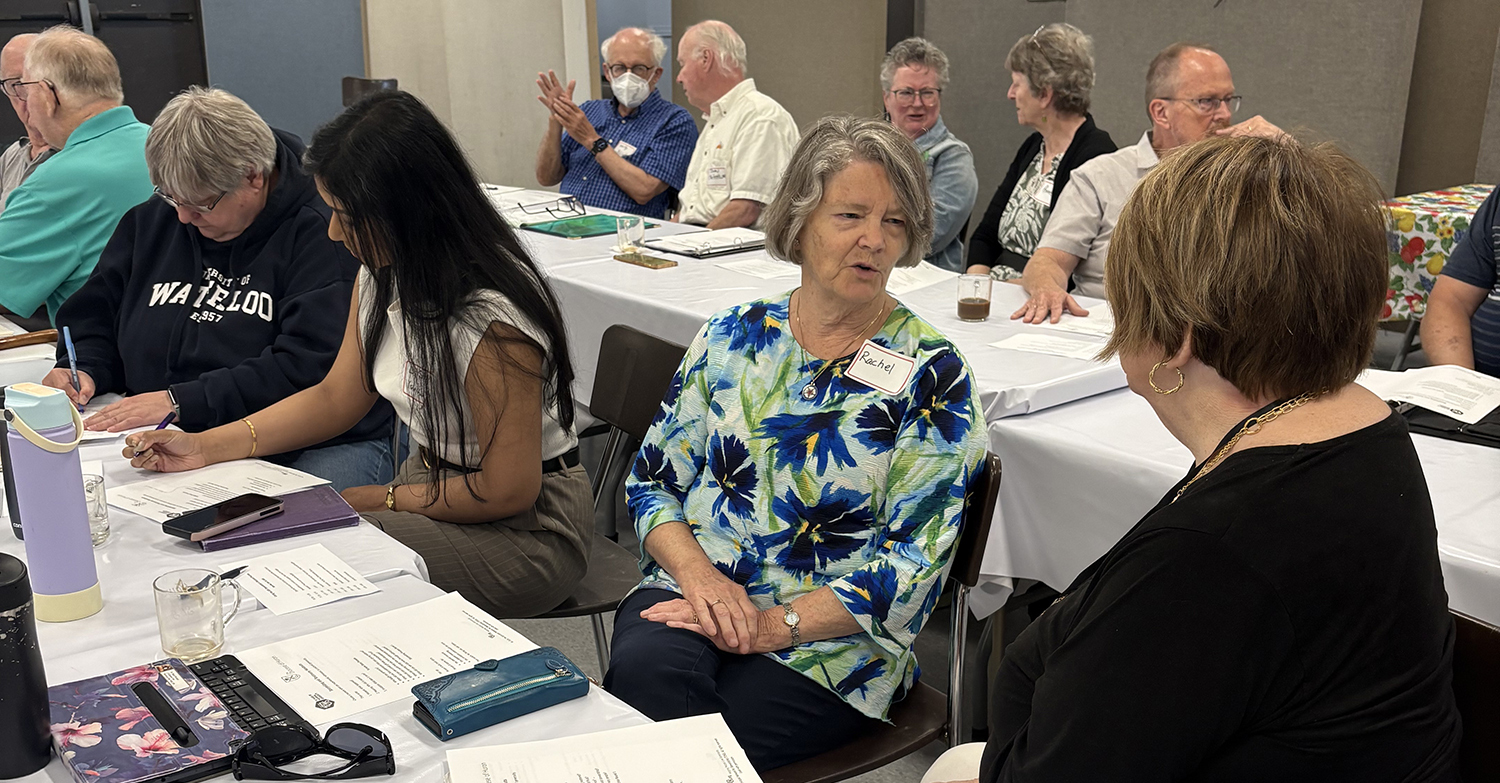
The stewardship formation weekend represented much more than a conference. It marked another step in an ongoing diocesan commitment to helping congregations grow as communities of generous disciples.
By Rev. Kevin Dixon
ON JUNE 12-14, more than one hundred clergy and lay leaders from across the Diocese of Huron gathered at the Church of St. Jude in London for an intensive weekend of stewardship formation led by Canon J. Davey Gerhard, Executive Director of TENS: The Episcopal Network for Stewardship. The weekend concluded with preaching and parish conversation on Sunday before diocesan stewardship initiatives continued into the following week with an additional clergy formation day in Essex Deanery.
The gathering marked an important step in the Diocese's growing commitment to cultivating stewardship not simply as an annual fundraising activity, but as a lifelong practice of Christian discipleship.
As Bishop Todd Townshend has frequently reminded the Diocese, stewardship is ultimately about participating in God's mission. Throughout the weekend, participants were invited to rediscover this vision through Scripture, teaching, conversation, testimony, and practical application.
A North American Leader in Stewardship Formation
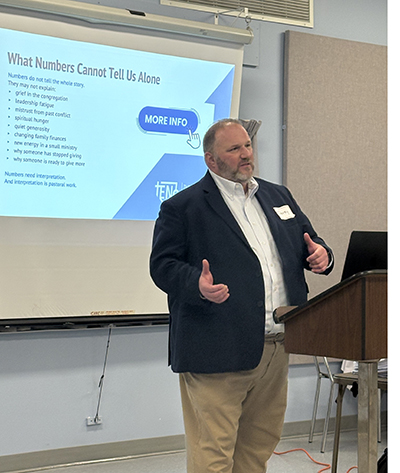 Canon Davey Gerhard has served as Executive Director of TENS since 2020, bringing decades of
experience in stewardship, fundraising, and theological education. Prior to his current role, he spent twelve years leading stewardship ministries in the Diocese of California and has worked with organizations including Habitat for Humanity and the YMCA. His experience also includes curriculum development, public policy, nonprofit consulting, and congregational leadership.
A graduate of the Episcopal Divinity School, Harvard University's Kennedy School of Government, and Kalamazoo College, Davey has become widely respected throughout The Episcopal Church for helping congregations move beyond anxiety about money toward a deeper understanding of generosity rooted in the Gospel.
Beginning with the Clergy
Friday, June 12, was devoted to clergy formation. Priests and deacons from across the Diocese gathered at St. Jude's to explore the theological foundations of stewardship and the pastoral practices that nurture generous disciples.
Davey opened with a conviction that framed the entire day: before churches think about campaigns, budgets, or annual appeals, they must first think about formation. "Generosity is not first a fundraising strategy," he reminded participants. "Generosity is part of Christian formation."
The Church's preaching and teaching ministry therefore occupies a central place in stewardship. If congregations are not intentionally helping people connect faith, money, discipleship, and mission, then the surrounding culture of our towns, cities, and nation will inevitably shape those relationships instead.
This emphasis represented an important shift in perspective. Rather than treating stewardship as something that happens during a particular season of the year, Davey encouraged clergy to see generosity as one of the central practices of Christian life — something that deserves attention throughout the entire year.
The morning explored practical approaches to preaching and teaching about generosity while remaining firmly rooted in Scripture and the Gospel.
Money and Meaning
The second major session turned toward the pastoral realities that often surround conversations about money.
"When we talk about money in church," Davey observed, "we are never talking about money only. We are talking about meaning."
Financial decisions reveal what people trust, value, fear, and hope for. Consequently, conversations about stewardship frequently touch deeply personal experiences involving family history, security, vocation, gratitude, and identity.
Rather than avoiding these conversations because they can provoke anxiety, clergy were encouraged to approach them pastorally, recognizing that stewardship often becomes an opportunity for spiritual growth.
Participants reflected together on the many ways questions of generosity intersect with prayer, discipleship, vocation, and the life of faith.
The Journey of Generosity
The final clergy session emphasized that generous disciples are formed gradually.
Generosity is rarely created by a single inspiring sermon or successful annual campaign. Instead, generosity develops over time through Scripture, prayer, testimony, teaching, invitation, and repeated opportunities to practice gratitude.
This long-term perspective encouraged clergy to think beyond annual financial goals toward cultivating congregational cultures where generosity becomes a natural expression of Christian discipleship.
Lively table discussions throughout the day demonstrated both the challenges and the opportunities facing congregations across the Diocese. Clergy shared experiences from parishes of every size, discovering common hopes and common obstacles while learning from one another's ministries.
Parish Leaders Gather
The formation continued on Saturday, June 13, as more than fifty parish leaders travelled from every corner of the Diocese for a day devoted specifically to lay stewardship leadership.
Davey's opening session invited participants to reconsider one of the most common assumptions about stewardship. Many churches instinctively associate stewardship with budgets, financial campaigns, or annual appeals.
Davey proposed what he called "The Big Reframe."
"Stewardship is not about funding the church's anxiety," he explained, "Stewardship is about forming generous disciples." Stewardship, he suggested, is the ministry of helping people recognize God's gifts, respond with gratitude, and participate fully in the life of the Body of Christ.
When viewed through this lens, financial giving becomes one expression of a much larger spiritual reality. Time, talents, relationships, prayer, hospitality, service, advocacy, and generosity all become part of faithful stewardship.
Learning to Talk About Money
The second session addressed one of the areas many church leaders – laity and ordained alike –find most difficult: speaking personally and pastorally about money.
Davey reminded participants that money is spiritual because life itself is spiritual.
The way people use their resources shapes attention, trust, priorities, relationships, imagination, discipleship, and participation in God's work. For this reason, stewardship belongs naturally within the Church's ministry – not because churches need money, but because Christians are continually learning how to live as disciples of Jesus Christ.
Participants explored ways of engaging stewardship conversations with honesty, grace, and confidence while avoiding both guilt and embarrassment. Throughout the day, discussion around the tables remained energetic as parish leaders considered how these ideas might be applied within their own congregations.
The Power of Testimony
One of the most memorable themes running through both days was the importance of personal testimony. Again and again, participants heard stories from fellow clergy and lay leaders describing moments when they came to understand stewardship in new ways. These testimonies became living illustrations of the very principles being taught.
Davey acknowledged that many faithful Christians hesitate to tell their stories. Some believe they have nothing significant to say. Others assume someone else would be better suited to speak. Still others worry that they are not spiritual enough or fear appearing overly persuasive.
Davey offered a different way of thinking. "If you have seen grace, you have a story. If you have received generosity, you have a story. If you have offered your gifts, you have a story. If you have been changed by a community, you have a story. If you have watched love multiply, you have a story.”
This simple reframing helped many participants recognize that stewardship testimony is not about extraordinary accomplishments. It is about witnessing to the ways God's grace has been experienced in ordinary life.
Throughout both formation days, personal stories enriched the teaching and inspired further conversation
Sunday Worship
Davey remained in London through Sunday, June 14, preaching at the Church of St. Jude. His sermon reinforced many of the themes developed during the previous two days.
Every Christian, he reminded the congregation, is a steward. Although stewardship certainly includes financial generosity, it ultimately concerns something much larger: discipleship, gratitude, and living from God's abundance rather than from scarcity.
Following worship, approximately a dozen parishioners remained for an informal forum. The conversation centred around one simple but profound question: "When has God felt warm to you?"
The responses became yet another opportunity for participants to share stewardship testimonies rooted not in financial transactions but in lived experiences of God's grace and generosity.
The discussion beautifully illustrated Davey's conviction that every Christian has a story worth telling
Stewardship Formation Continues
The momentum generated during the weekend continued into the following week.
B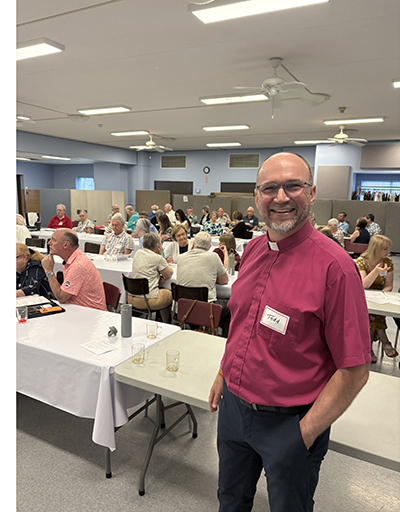 ecause clergy in Essex Deanery had already been committed to a previously scheduled deanery event on June 12, an additional clergy formation day was organized for Tuesday, June 16, at St. Mark's-by-the-Lake in St. Clair Beach.
Bishop Todd Townshend and Kevin Dixon, the Diocese of Huron's Stewardship Coordinator, travelled to Essex to offer a modified version of the clergy formation.
Drawing upon Davey's teaching, Kevin reviewed many of the weekend's central themes while also introducing practical tools designed to help congregations build a year-round stewardship ministry.
Rather than focusing exclusively on annual financial appeals, participants were introduced to a suggested one-year stewardship cycle integrating preaching, teaching, storytelling, gratitude, pastoral care, financial invitation, and celebration throughout the calendar year.
The approach reflected one of the weekend's central insights: stewardship flourishes best when it becomes woven into the ordinary rhythms of parish life rather than being confined to a single campaign season.
Looking Ahead
The conversations begun at St. Jude's will continue as parishes adapt what they learned to their own local contexts. No two congregations will implement stewardship in exactly the same way. Yet the underlying vision remains consistent.
Stewardship is about recognizing God's abundance. It is about gratitude before obligation. It is about participation rather than pressure. It is about discipleship more than dollars.
Those gathered in London returned home carrying not merely new ideas or practical tools, but a renewed vision of stewardship as one of the Church's most joyful ministries: helping people discover that everything they have – and everything they are – is ultimately a gift from God, entrusted to them for the blessing of the world.
Rev. Kevin Dixon is the Stewardship Coordinator for the Diocese of Huron and the Rector of St. Jude's, London.